Drug overdose deaths spike among middle-aged women

By MIKE STOBBE


(AP) Graphic shows national data on drug overdosing; 2c x 6 inches; 96.3 mm x 152 mm;
Full Image

ATLANTA (AP) – Overdose deaths in the U.S. are rising fastest among middle-aged women, and their drug of choice is usually prescription painkillers, the government reported Tuesday.

“Mothers, wives, sisters and daughters are dying at rates that we have never seen before,” said Dr. Thomas Frieden, director of the Centers for Disease Control and Prevention, which compiled the data.

The problem is one of the few health issues the CDC is working on that are clearly getting worse, he added.

For many decades, the overwhelming majority of U.S. overdose deaths were men killed by heroin or cocaine. But by 2010, 40 percent were women – most of them middle-aged women who took prescription painkillers.

Skyrocketing female overdose death rates are closely tied to a boom in the overall use of prescribed painkillers. The new report is the CDC’s first to spotlight how the death trend has been more dramatic among women.

The CDC found that the number and rate of prescription painkiller overdose deaths among females increased about fivefold 1999 to 2010. Among men, such deaths rose about 3 1/2 times.

Overall, more men still die from overdoses of painkillers and other drugs; there were about 23,000 such deaths in 2010, compared with about 15,300 for women. Men tend to take more risks with drugs than women, and often are more prone to the kind of workplace injuries that lead to their being prescribed painkillers in the first place, experts say.

But the gap has been narrowing dramatically.

Studies suggest that women are more likely to have chronic pain, to be prescribed higher doses, and to use pain drugs longer than men. Some research suggests women may be more likely than men to “doctor shop” and get pain pills from several physicians, CDC officials said.

But many doctors may not recognize these facts about women, said John Eadie, director of a Brandeis University program that tracks prescription-drug monitoring efforts across the United States.

The report highlights the need for “a mindset change” by doctors, who have traditionally thought of drug abuse as a men’s problem, he said. That means doctors should consider the possibility of addiction in female patients, think of alternative treatments for chronic pain, and consult state drug monitoring programs to find out if a patient has a worrisome history with painkillers.

The CDC report focuses on prescription opioids like Vicodin and OxyContin and their generic forms, methadone, and a powerful newer drug called Opana, or oxymorphone.

“These are dangerous medications and they should be reserved for situations like severe cancer pain,” Frieden said. He added that there has not been a comparable increase in documented pain conditions in the U.S. public that would explain the boom in painkiller prescriptions in the last 10 or 15 years.

Some experts said the increase in prescriptions can be traced to pharmaceutical marketing campaigns.

CDC researchers reviewed death certificates, which are sometimes incomplete. Specific drugs were not identified in every death. In others, a combination of drugs was involved, such as painkillers taken with tranquilizers.

CDC officials think more than 70 percent of the overdose deaths were unintentional.

One striking finding: The greatest increases in drug overdose deaths were in women ages 45 through 54, and 55 through 64. The rate for each of those groups more than tripled between 1999 and 2010.

In 2010, overdose deaths in those two groups of middle-aged women added up to about 7,400 – or nearly half the female total, according to CDC statistics.

It’s an age group in which more women are dealing with chronic pain and seeking help for it, some experts suggested.

Many of these women probably were introduced to painkillers through a doctor’s prescriptions for real pain, such as persistent aches in the lower back or other parts of the body. Then some no doubt became addicted, said Dr. Andrew Kolodny, a psychiatrist who specializes in addiction at Maimonides Medical Center in New York City.

There aren’t “two distinct populations of people being helped by opioid painkillers and addicts being harmed. There’s overlap,” said Kolodny, president of a 700-member organization Physicians for Responsible Opioid Prescribing.

Divided We Stand (and will fall)

njjuly4th.

By 

Updated: July 3, 2013 | 6:15 a.m.
July 3, 2013 | 6:00 a.m.


It seems entirely revealing, if dispiriting, that the days before the July Fourth holiday showed Red America and Blue America pulling apart at an accelerating rate.

Of all of our national holidays, Independence Day is the one most intimately rooted in our common history and shared experience. Yet this year it arrives against a background of polarization, separation, and confrontation in the states and Washington alike. With municipal politics as the occasional exception, the pattern of solidifying agreement within the parties—and widening disagreement between them—is dominating our decisions at every level.

On almost all of our major policy choices, the common thread is that the election of 2012 did not “break the fever” of polarization, as President Obama once hoped it might. Last November, Obama became only the third Democrat in the party’s history to win a majority of the popular vote twice. But congressional Republicans, preponderantly representing the minority that voted against Obama, have conceded almost nothing to his majority—leaving the two sides at a stalemate. Meanwhile, beyond the Beltway, states that lean Democratic and those that lean Republican are separating at a frenetic pace.

Consider a few recent headlines. The Supreme Court decision upholding the lower-court invalidation of California’s Proposition 8 restored gay marriage in the nation’s largest state. It also capped a remarkable 2013 march for gay marriage through blue states, including Delaware, Minnesota, and Rhode Island (with Illinois and New Jersey possibly joining before long). The consensus is solidifying fast enough that 2014 could see several blue-state Republican gubernatorial candidates running on accepting gay-marriage statutes as settled law. Former California Lt. Gov Abel Maldonado, a likely 2014 GOP gubernatorial contender who this week reversed his earlier opposition to support gay marriage, may be an early straw in that breeze.

The story in red states, though, remains very different. Almost all of them have banned gay marriage. Some activists believe Justice Anthony Kennedy’s embrace of equal-protection arguments in the decision striking down the federal Defense of Marriage Act might enable litigation challenging those bans; but if not, it may take a very long time for the support for gay marriage among younger voters to dissolve the resistance to the idea in culturally conservative states. Absent further Supreme Court action, the nation could remain a “house divided” on gay marriage for longer than many may expect: The high court’s ruling striking down the remaining 16 state laws banning interracial marriage came in 1967—nearly two centuries after the first state had revoked its ban (Pennsylvania in 1780).

Meanwhile, as gay marriage advances in blue states, red states are competing to impose the tightest restrictions on abortion since the Supreme Court established the national right to it in Roe v. Wade. In Ohio this week, Republican Gov. John Kasich signed legislation requiring ultrasound exams before abortions, effectively cutting off funding for Planned Parenthood and making it more difficult for abortion providers to transfer patients to public hospitals. In Texas, after the dramatic filibuster by Democratic state Sen. Wendy Davis temporarily disrupted his plans, Republican Gov. Rick Perry this week opened another legislative special session that is likely to ban abortion at 20 weeks and impose stringent new safety requirements that would shutter most of the state’s abortion providers. All of this follows a cascade of legislation restricting abortion in Republican-run states from Arkansas and Louisiana to Kansas and North Dakota—most of which are already facing legal challenges.

In Washington, there’s little sign of convergence. Hopes for a budget “grand bargain” are flickering. In the Senate, the two parties have worked together to pass a farm bill, and more dramatically a sweeping immigration overhaul that won support from all 54 Democrats and 14 Republicans. But House Republicans, who recently collapsed into chaos when they couldn’t pass a farm bill, are pledging to block any reform that includes a path to citizenship for illegal immigrants—an indispensable component of legislation as far as Democrats are concerned. On big issues, the Supreme Court looks just as chronically divided, and the split often comes down to Republican- and Democratic-appointed justices.

All of this reveals a political system losing its capacity to create common ground between party coalitions divided along economic, racial, generational, and even religious lines. Some variation in state policy is healthy, but states are now diverging to an extent that threatens to undermine equal protection under the law. The stalemate in Congress reflects genuine differences, but the reluctance to compromise—most intractable among House Republicans—prevents us from confronting common challenges.

In all these ways, our contemporary politics is ignoring the simple truth that none of us are going away—not the cosmopolitan coasts, nor the evangelical South. Our choices ultimately come down to bridging our differences or surrendering to endemic separation in the states and stalemate in Washington. This week we celebrate the moment when the authors of the Declaration of Independence concluded they had no choice but “to dissolve the political bands which have connected them with another.” It’s an excellent opportunity to consider how ominously our own “political bands” are fraying.

SUV Towed From Conn. Home; Possible Link To Boston Double Murder « CBS Boston

This is indicative of what’s wrong with professional sports. The combination of low brow people, gang connections and the usage of steroids are causing crime that shouldn’t take place. Having coached before, I can tell you of the entitlement mentality most athletes have. They’ve had someone kiss their ass, taking care of everything they’ve ever wanted, so the players continue to expect it. 

When I was in college, and also coaching, the athletes (more often than not) could be told apart from the regular students because they drove new cars. And not Fords or Chevy’s. No, they drove BMW’s and Mercedes. Where’s the money coming from when they’re not allowed to work a job during the school year? It’s because the shoe companies and AAU officials (and some of the colleges themselves) pay for them.

What this player has done (along with the one in Cleveland) is give the NFL a terrible black eye. It’s been a long time since the Ray Lewis deal, which most people forget about over the years, but this one will be forever etched into the minds of the public. 

It’s my hope that the NFL will do something to address the thug culture running a muck. 


SUV Towed From Conn. Home; Possible Link To Boston Double Murder « CBS Boston.

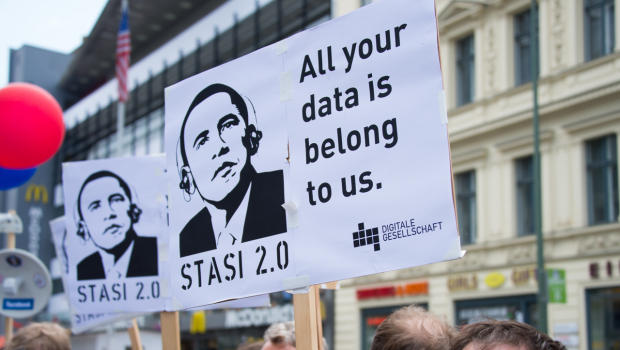
European officials lash out at new NSA spying report

Great just great…we can’t limit our trying to erode personal freedoms to this country alone. As some who values free speech and our constitutional rights, I find this to be utterly reprehensible. Now we’ll get to suffer from economic sanctions from other countries. I guess the ‘fundamental transformation of America’ was to make it the most evil country on the planet. 

germany_170793411_620x350


Updated 4:24 p.m. ET


BERLINA top German official accused the United States on Sunday of using “Cold War” methods against its allies, after a German magazine cited secret intelligence documents to claim that U.S. spies bugged European Union offices.


Play VIDEO

Obama to Germans: America is not “rifling” through your emails

Justice Minister Sabine Leutheusser-Schnarrenberger was responding to a report by German news weekly Der Spiegel, which claimed that the U.S. National Security Agency eavesdropped on EU offices in Washington, New York and Brussels. The magazine cited classified U.S. documents taken by former NSA contractor Edward Snowden that it said it had partly seen.


“If the media reports are accurate, then this recalls the methods used by enemies during the Cold War,” Leutheusser-Schnarrenberger said in a statement to The Associated Press.


“It is beyond comprehension that our friends in the United States see Europeans as enemies,” she said, calling for an “immediate and comprehensive” response from the U.S. government to the claims.


Other European officials demanded an explanation from the U.S.


“I am deeply worried and shocked about the allegations,” European Parliament President Martin Schulz said in a statement, according to CNN. “If the allegations prove to be true, it would be an extremely serious matter which will have a severe impact on EU-US relations. On behalf of the European Parliament, I demand full clarification and require further information speedily from the U.S. authorities with regard to these allegations.”


The revelations come at a particularly sensitive time for U.S.-E.U. relations, as long-awaited talks about a new trade pact are scheduled to begin next week. It is unclear how the latest report on NSA spying are going to affect them, but the trade pact has been a centerpiece of the Obama administrations diplomatic efforts in Europe for some time.

According to Der Spiegel, the NSA planted bugs in the EU’s diplomatic offices in Washington and infiltrated the building’s computer network. Similar measures were taken at the EU’s mission to the United Nations in New York, the magazine said.


Der Spiegel didn’t publish the alleged NSA documents it cited or say how it obtained access to them. But one of the report’s authors is Laura Poitras, an award-winning documentary filmmaker who interviewed Snowden while he was holed up in Hong Kong.


The magazine also didn’t specify how it learned of the NSA’s alleged eavesdropping efforts at a key EU office in Brussels. There, the NSA used secure facilities at NATO headquarters nearby to dial into telephone maintenance systems that would have allowed it to intercept senior EU officials’ calls and Internet traffic, Der Spiegel report said.


Germany was allegedly the focus of the European spying, according to The Guardian, categorising Washington’s key European ally alongside China, Iraq or Saudi Arabia in the intensity of the electronic snooping.


During a trip through Europe two weeks ago, President Obama assured an audience in Germany that America is not indiscriminately “rifling” through the emails of ordinary European citizens, describing the National Security Agency’s surveillance programs as a “circumscribed” system that has averted threats in America, Germany, and elsewhere.


Leutheusser-Schnarrenberger urged EU Commission President Jose Manuel Barroso to take personal responsibility for investigating the allegations.


In Washington, a statement from the national intelligence director’s office said U.S. officials planned to respond to the concerns with their EU counterparts and through diplomatic channels with specific nations.

However, “as a matter of policy, we have made clear that the United States gathers foreign intelligence of the type gathered by all nations,” the statement concluded. It did not provide further details.

NSA Director Keith Alexander last week said the government stopped gathering U.S. citizens’ Internet data in 2011. But the NSA programs that sweep up foreigners’ data through U.S. servers to pin down potential threats to Americans from abroad continue.


Speaking on CBS’ “Face the Nation,” former NSA and CIA Director Mike Hayden downplayed the European outrage over the programs, saying they “should look first and find out what their own governments are doing.” But Hayden said the Obama administration should try to head off public criticism by being more open about the top-secret programs so that “people know exactly what it is we are doing in this balance between privacy and security.”

“The more they know, the more comfortable they will feel,” Hayden said. “Frankly, I think we ought to be doing a bit more to explain what it is we’re doing, why, and the very tight safeguards under which we’re operating.”

Hayden also defended a secretive U.S. court that weighs whether to allow the government to seize the Internet and phone records from private companies. The Foreign Intelligence Surveillance Court is made up of federal judges but does not consider objections from defense attorneys in considering the government’s request for records.

© 2013 CBS Interactive Inc. All Rights Reserved.


Senators Ask if NSA Collected Gun Data

Now I’m not whack job gun owner, but as a more liberal leaning social person, I find the intrusions on citizen’s rights to be most troubling. In many ways I reminds me of the famous quote about Nazi Germany:

First they came for the communists,
and I didn’t speak out because I wasn’t a communist.

Then they came for the socialists,
and I didn’t speak out because I wasn’t a socialist.

Then they came for the trade unionists,
and I didn’t speak out because I wasn’t a trade unionist.

Then they came for the Jews,
and I didn’t speak out because I wasn’t a Jew.

Then they came for the Catholics,
and I didn’t speak out because I wasn’t a Catholic.

Then they came for me,
and there was no one left to speak for me.

Here’s the rub. If we don’t stand up for our rights, which range from free speech to the right to bear arms and defend ourselves, than we’re asking for trouble. A lot of people I know who are farther to the left than I am, say this abridgement is fine that we need to “reign in” some of these rights and have no problem with the spying, etc etc. Well, as  I tell them, that’s all well and good, but weren’t you the same ones raising holy hell over the Patriot Act (which I despise) and G.W. Bush (who I also despise) using too much of the Federal Government’s power to control us? It was wrong then but suddenly right now because someone of the same ideology is in power?? 

How stupid! Just because it’s the right wing people being investigated now doesn’t mean the shoe can’t be on the other foot and then the left wing groups will be heavily investigated. Oh yes, this is a problem to my friends, but not right now. How intellectually dishonest. I have a problem with it all-regardless of who’s in power. 


Clapper-James-APP


BY: 


Senators are questioning whether the National Security Agency collected bulk data on more than just Americans’ phone records, such as firearm and book purchases.

A bipartisan group of 26 senators, led by Sen. Ron Wyden (D., Ore.) asked Director of National Intelligence James Clapper to detail the scope and limits of the National Security Agency’s surveillance activities in a letterreleased Friday.

“We are concerned that by depending on secret interpretations of the PATRIOT Act that differed from an intuitive reading of the statute, this program essentially relied for years on a secret body of law,” the senators wrote in the letter.

The NSA’s surveillance program has come under intense scrutiny following a leak revealing the agency harvested the phone metadata of millions of American citizens.

The senators noted that the federal government’s authority under Section 215 of the PATRIOT Act is broad and rife with potential for abuse. Among the senators’ concerns was whether the NSA’s bulk data harvesting program could be used to construct a gun registry or violate other privacy laws.

“It can be used to collect information on credit card purchases, pharmacy records, library records, firearm sales records, financial information, and a range of other sensitive subjects,” the senators wrote. “And the bulk collection authority could potentially be used to supersede bans on maintaining gun owner databases, or laws protecting the privacy of medical records, financial records, and records of book and movie purchases.”

The senators asked Clapper in the letter whether the NSA used PATRIOT Act authorities to conduct bulk collection of other types of records, and whether there are any instances of the agency violating a court order in the process of such collections.

Civil libertarians say such surveillance is a violation of privacy. However, the government has defended the program, saying it helped thwart several terrorist attacks and is minimally invasive.

Second Amendment groups and Republican members of Congress have long warned against the creation of a national gun registry. Fears of such a registry bogged down several attempts to forge a bipartisan gun-control bill in the Senate earlier this year.

“In this country, the government can’t just monitor your constitutionally
protected activities—like gun ownership—just because it wants to,” said Brian Phillips, a spokesman for Sen. Mike Lee (R., Utah), who signed onto the letter.  “The justification that, ‘if you’re not doing anything wrong, you don’t have to worry about it,’ turns us into a police state very quickly. That’s why
Congress is right to seek broad oversight of the NSA’s data collection programs.”


150 Years Later, Two States Are Still Fighting Over the Battle of Gettysburg

Now I’m not racist, and I don’t condone the history of slavery and the role BOTH the United States and Africa played in it. It was a travesty that still continues to this day in certain parts of the world. And sexual slavery, and the human trafficking to feed it, is a Global Problem. However, living in Virginia, (and hear me out of this) I don’t have a problem with the flag being borrowed. You see, this state, along with Md. and PA, played a massive role in the Civil War. It was here that the Monitor and Merrimack fought their famous battle. This set the stage for the modern battleship.

Virginia also was both the Capital of the South (Richmond specifically) and the scene (Appomatox, Va. located 20 miles east of Lynchburg Va along US Rt 460) of the final surrender of the South to the North. Thus, the history of the Civil War is forever linked to the state whether people like it or not. In fact, there are entire regiments (as I’ve shown in my pictures on this blog) that are buried in Hollywood Cemetery in downtown Richmond. Most of these men died in Harper’s Ferry, Bull Run (outside Manassas Va) and Gettysburg.

Like it or not, the history is linked to us down here and I don’t feel it’s too much to borrow it for something-provided equal time is given to both the issues of states rights (which was the driving point of the war) and slavery are covered in equality. History needs to be taught freely to people and not be limited to Political Correctness, which, in my opinion, is ruining this country. The thought police will ruin a person for just saying the wrong thing. As a writer, and a defender of Free Speech (even when I find the comments offensive), it’s most troubling that we’re trying so hard to limit it. Doesn’t anyone know their history and what happens when the combination of free speech, right to defend yourself, and habeus corpus  are taken away? Dictatorships are on its heels. 

civil war


Virginia wants a captured Confederate flag back. Minnesota’s governor says “it would be a sacrilege to return it to them.”

By Brian Resnick

Updated: June 28, 2013 | 12:54 p.m. 
June 28, 2013 | 12:40 p.m.


Next week marks the 150th anniversary of the Battle of Gettysburg, but it appears, somehow, there is still some bad blood between a pair of Northern and Southern states.

Here’s the controversy: The Minnesota Historical Society has a Confederate flag in its possession, captured from a Virginia regiment during the last day of the battle. For the sake of the anniversary, Virginia Gov. Bob McDonnell asked Minnesota to loan it to them (McDonnell is the governor who had declared April 2010 “Confederate History Month” at the behest of the Sons of Confederate Veterans, but then apologized for not mentioning slavery in the proclamation.) Minnesota Gov. Mark Dayton’sresponse to the request was simple: No way.

As he told a crowd of reporters and Civil War reenactors earlier this week:

The governor of Virginia earlier this year requested that the flag be loaned, quote, unquote, to Virginia to commemorate–it doesn’t quite strike me as something they would want to commemorate, but we declined that invitation.


It was taken in a battle at the cost of the blood of all these Minnesotans. And I think it would be a sacrilege to return it to them. It was something that was earned through the incredible courage and valor of men who gave their lives and risked their lives to obtain it. And, as far as I’m concerned, it’s a closed subject.

Why the Resistance? The Abridged Story of the Virginia Flag

Marshall Sherman, 1823-1896
(via findagrave.com)
The Minnesota 1st Volunteer Infantry Regiment captured the flag on July 3, 1863, the last day of the battle. On July 2, the Minnesota 1st had suffered massive losses after being ordered to conduct a diversionary strike on the Confederates while the Union collected reinforcements. At the end of the day, only 47 out of more than 250 Minnesotan men were still alive. One of those remaining was Pvt. Marshall Sherman (pictured right; he actually sat out the battle).

The next day, Sherman along with the remaining members of the Minnesota 1st were in the the center of the Union lines when Confederate Gen. Robert E. Lee ordered an assault. “Pickett’s Charge,” as it is called, is considered the high-water mark of the Confederacy.

It was a brutal, chaotic scene. “We just rushed in like wild beasts,” one Minnesotan fighter recalled. “Men swore and cursed and struggled and fought, grappled in hand-to-hand fight, threw stones, clubbed their muskets, kicked, yelled, and hurrahed.” The charge failed, leading to the Union victory at Gettysburg. 

Amid the firefight, Sherman eyed a Virginian “shouting like mad,” according to a Roanoke Timesrecollection. He was barefoot, the legend goes, as he charged the Virginian with his bayonet. Jabbing at the enemy, Sherman said, “Throw down that flag or I’ll run you through.” He was awarded the Medal of Honor for his effort.

That’s one reason the flag is so important to the state: The blood it took to get it and the valor bestowed upon Sherman for capturing it confer a historical pride. The flag remains “one of the true treasures of the Minnesota Historical Society,” as the society says on its website.

Over the years, there have been many calls for Confederate flags to be returned to their home states. President Cleveland issued even an executive order in 1887 to return the colors of a few Confederate units in an act of good will. Many scoffed at that, including former Confederate President Jefferson Davis, who, according to the Roanoke Times, said that banners belong to the captors, by “all known military precedents.” Cleveland eventually rescinded the order.

In 2000, Chris Caveness, a Roanoke resident, spearheaded a federal lawsuit to get the flag back in Virginia based on a 1905 act of Congress allowing for the return of Confederate flags in possession of the War Department. From the Roanoke Times:

Caveness … enlisted his own big gun in the form of former Virginia Attorney General Anthony Troy. Helped by a cadre of Richmond Law School students, Troy wrote his own 45-page legal opinion with exhibits, arguing “federal property cannot be abandoned or disposed without Congressional assent.” Since Congress never gave the flag away, Troy concluded, Minnesota is illegally in possession of it.

The litigation did not result in action. And the skirmish over the flag continues, 150 years later.

For those interested in reading more about the fight over the flag, visit the Minnesota Historical Society.

H/T Kevin Levin at Civil War Memory

150th Anniversary of Gettysburg Provides Bigger Story

I remember going there while in High School. It was humbling to look at such a rural area and know that thousands of men fought there and it wasn’t against a foreign foe. No, it was American against American, brother against brother, in the one war that scarred this country more than any other. I hope that another one doesn’t happen but I’m starting to feel that there’s an inevitable collision course as this country continues to fracture into what can only be called ‘two America’s,’ with each having a diametrically opposite opinion about what works and the course we should take.
130628170904-01-gettysburg-reenactment-horizontal-gallery


(CNN) — “For every Southern boy fourteen years old, not once but whenever he wants it, there is the instant when it’s still not yet two o’clock on that July afternoon in 1863.”

So starts a powerful passage by William Faulkner in “Intruder in the Dust.” The Mississippi novelist and poet poignantly painted the scene of dry-mouthed young men anticipating battle.

But the Confederate attack, known in the annals of history as Pickett’s Charge, ended about a mile away in failure, gray-clad troops blunted by determined Union troops at Gettysburg, Pennsylvania.

Those young boys recalled by Faulkner were stopped at the Angle, a stone wall considered the high-water mark of the Confederacy — perhaps the last chance for victory in the U.S. Civil War. Instead, the Union prevailed at Gettysburg, a turning point in the four-year war that claimed at least 620,000 lives.

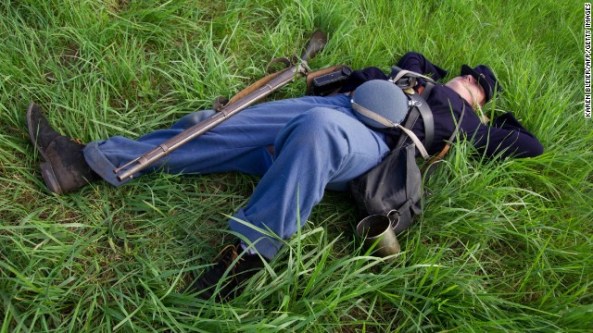
This weekend and through July 7, between 200,000 and 300,000 visitors — more than the number of combatants — will flock to the town and fields of Gettysburg National Military Park to mark the 150th anniversary of the three-day clash, which cost an incredible 51,000 casualties.

Pickett’s Charge will be the climactic event of a large re-enactment this weekend outside of park boundaries. On July 3, the actual anniversary of the attack, National Park Service rangers will guide thousands of visitors in loose formation across a gently rolling field. Others will stand where Federal regiments poured rifle and artillery fire into the arc of Confederates.

The event ends with the playing of Taps by multiple musicians, a solemn remembrance of selfless sacrifice by the warriors at Gettysburg.

Times have changed since previous anniversary observances, including the 1938 reunion, at which grizzled veterans of the battle met at Gettysburg one last time in an event known for reconciliation. They shook hands across that famous wall at the Angle. Some let out the haunting Rebel Yell.

The 150th commemoration of the battle will tell a wider story than previous observances, officials told CNN.

“For decades, people came here for military and black powder,” said Carl Whitehill, media relations manager for the Gettysburg Convention & Visitors Bureau. “Now they want to know about the civilians and what they endured during and after the battle.”

Mike Litterst of the National Park Service said interpretations at federal Civil War battlefields have evolved in the past 25 years. Besides telling the story of the battles and the homefront, exhibits increasingly stress the importance of the conflict to civil rights and the role of African-Americans, thousands of whom served in the Union Army.

About 400 events are planned over 10 days, including a second battle re-enactment next weekend.

Gettysburg National Military Park on Sunday will hold one of its 150th anniversary signature events, an evening program entitled“Gettysburg: A New Birth of Freedom.” The keynote speaker is historian Doris Kearns Goodwin. Country music singer Trace Adkins and a military band will perform the national anthem.

The ceremony concludes with a procession to the Soldiers’ National Cemetery, where luminaries will mark each of 3,500 graves of soldiers who died at Gettysburg.

“I think it is an opportunity for people to have a deeper understanding of what happened here and how it is still relevant in 21st century America,” said Litterst.

Small town made way into history books

Gettysburg, then a bucolic town of 2,400 souls, found itself directly drawn into the Civil War during the first days of July 1863. Southern troops took the war to the North after a resounding victory at the Battle of Chancellorsville two months before.

Gen. Robert E. Lee’s soldiers on the first day of battle pushed Union troops through the town and onto hills and ridges that eventually played a large part in the battle’s outcome.

“There was street fighting in the inside (of Gettysburg),” said Whitehill. “Throughout the town, a lot of people were shooting muskets out of windows.”

Jennie Wade, while kneading dough, was fatally shot in the back on July 3, the only civilian casualty at Gettysburg,

Gettysburg, now with a population of about 7,800, and surrounding Adams County anticipate a $100 million economic impact from 150th anniversary observances.

Whitehill has spent much of his time assisting nearly 700 journalists from across the United States and abroad. Among international media are German, UK, Australian and Swiss companies.

“One of the things that amazes international visitors and media is why we re-enact this war. It is such a pivotal and painful time for this country but every year we bring it to life and re-enact it.”

The area’s 2,600 rooms and 1,800 campsites are largely filled, although a few are left.

“A lot of people move to this area for the history,” said Whitehill. “A lot of people just love being close to it.”

First aid tents all over town will assist any visitors and event participants who run into problems from the muggy and warm temperatures.

Visitors can take free shuttles into downtown and re-enactments. The National Park Service also offers shuttles and satellite parking.

Traffic flow on Friday, the first full day of 150th events, went well.

Thousands of re-enactors go back in time

Don Ernsberger led the building of a replica Pickett’s Charge stone wall for this weekend’s re-enactment at Bushey Farm.

Seventy volunteeers shaped 88 tons of stone to re-create the focal point of the march.

“The Confederates captured that angle for about five to eight minutes and the Union reinforcements came in and pushed them out.”

Ernsberger, who authored a book about the wall and the attack, will portray a Union lieutenant on Sunday.

“I wrote this book three years ago and I hope to see it happen before my eyes,” he said.

An estimatetd 10,000 re-enactors are on hand at Bushey Farm this weekend, said Kris Shelton, media and marketing coordinator for the Blue Gray Alliance, which is sponsoring the event.

The first mock battle went well Friday, said Shelton, who said organizers have detailed logistics plans for the maneuvering of troops at the site.

There’s a chance of rain for the next several days.

“We are historically accurate, but we don’t control the weather,” Shelton said.

Organizers expect tens of thousands of spectators on Saturday and Sunday.

Besides portrayals of the fighting, the re-enactment will include about 200 individuals representing the town of Gettysburg in 1863.

“The civilians living there have done careful research of the residents of the town and they have taken on their identities, including their trade and craft,” said Shelton.

Safety of participants and guests comes first, but authenticity also is a priority.

“People are here to recognize and honor and commemorate what these people went through, the sacrifices of both soldiers and civilians,” said Shelton.

The battles draw re-enactors devoted to donning the proper uniforms and equipment. They can get caught up in the heat of the battle and emotional or significant moments.

“That intensity is something that really sparks re-enactors,” she said. “That combined with leaving electronics and the modern world behind.”

Visitors and participants alike understand that real people died in battle — that freedom had a cost.

Making the battlefield historically accurate

While battle re-enactments are not permitted on National Park Service sites — the commemorative clashes will be on privately owned land — such events and the visitor experience at Gettysburg National Military Park are “not mutually exclusive,” said Litterst.

“We want that excitement to spill over to the sites and grounds where the events actually took place,” he said.

The National Park Service does not provide crowd estimates or projections, but it’s clear the park will be busy over the next week, given ranger-led hikes and special programs.

“We will probably see crowds we probably haven’t seen before, or since the centennial,” said Litterst. “For the next couple weeks, there won’t be many places to get some alone time here.”

But for those who want to get away from at least some of the hustle and bustle, he recommends a visit to the East Cavalry Battlefield Site east of town and the park’s Big Round Top, which has a great walking trail.

The battlefield looks much different from even 20 years ago as the NPS worked to make it look much closer to its 1863 appearance. Trees have been removed in some places and orchards planted.

Thousands may make the July 3 Pickett’s Charge commemorative march, timed to the actual assault.

Those with younger legs may be in front. And, like battles of old, there will be stragglers.

“There will be not be a shortage of people with stories and pictures of great-great grandfathers who made that march,” said Litterst. “That is a neat part of the story.”


 

Pelosi Says To Celebrate Obamacare on July 4th??

tumblr_lwjqw3jXQp1r53ppjo1_500


What the hell? I thought it was to celebrate our independence as a country. When did it become a celebration about something the majority of the country doesn’t want? I just don’t get it.

According to Nancy Pelosi, Democrats won’t only celebrate American independence on July 4, but will also be celebrating “health independence” thanks to Obamacare. The House minority leader tied the one-year anniversary of the Supreme Court’s ruling upholding the healthcare law to the July 4 holiday.

“It captures the spirit of our Founders, the spirit they wrote in the Declaration of Independence: life, liberty, and pursuit of happiness,” Pelosi said at a weekly press conference this morning, explaining the law allows Americans to have “a healthier life, and the liberty to pursue a person’s happiness.”