Comparing Oneself to Other Writers

nanowrimo-1


I’m behind today because I cut our 5 acres of grass a couple hours ago, so I’ve just now started cruising the various boards. And, believe it or not, something’s already caught my eye. It was a thread titled ‘Who Do You Write Like?’

What the hell? Does an aspiring writer need to compare themselves against another? All that does is have a tendency to lead one down a rabbit hole as they try to copy the one they ‘compare to.’ Why would you want to do that to yourself? It’s insanity if you asked me.

Who does a writer compare to then?? Themselves! No one writes identically to another author no matter how hard they try. You could try to emulate, or even copy, Stephen King or Nabacov but you know what? It wouldn’t happen no matter what. Each persons word usage, and sentence structure, are different from another and that’s just how it is.

Furthermore, as I said before, it also leads a writer down a rabbit hole they don’t need to follow. By trying to copy another writer, you don’t learn anything on your own. I mean, how do you know the one you’re copying is a great writer or terrible writer? Without being able to create prose in your own style, then it’s impossible to make the determination.

And publishing success doesn’t translate to great writing either. Sounds crazy, but a lot of novels are best sellers because they are entertaining-and that’s a different world then pure wordsmanship.

So, try to be yourself and not copy someone else.

Happy writing.

Starting Your Book With Exposition

nanowrimo-1


A lot of people are asking if they should start their novel off with exposition and the answer is no! Do not take those first 5-6 precious paragraphs you need to catch a reader’s attention and waste them on useless narration. Do not put back story into them. In fact, you don’t have to write the back story in all at one time. Dribble it out! For example: I got an entire back story built for Talia, but I only let it out in drips and dribs over all of the novels with her. Plus, I’ll run a subplot that deals with something in her past that’s relevant to the current novel to help spread out the background. Keep in mind Stephen King’s quote on the subject:

“The most important things to remember about back story are that (a) everyone has a history and (b) most of it isn’t very interesting.”

So, don’t waste that valuable time on needless things.


Is Dystopia Overdone?

bladerunner-full


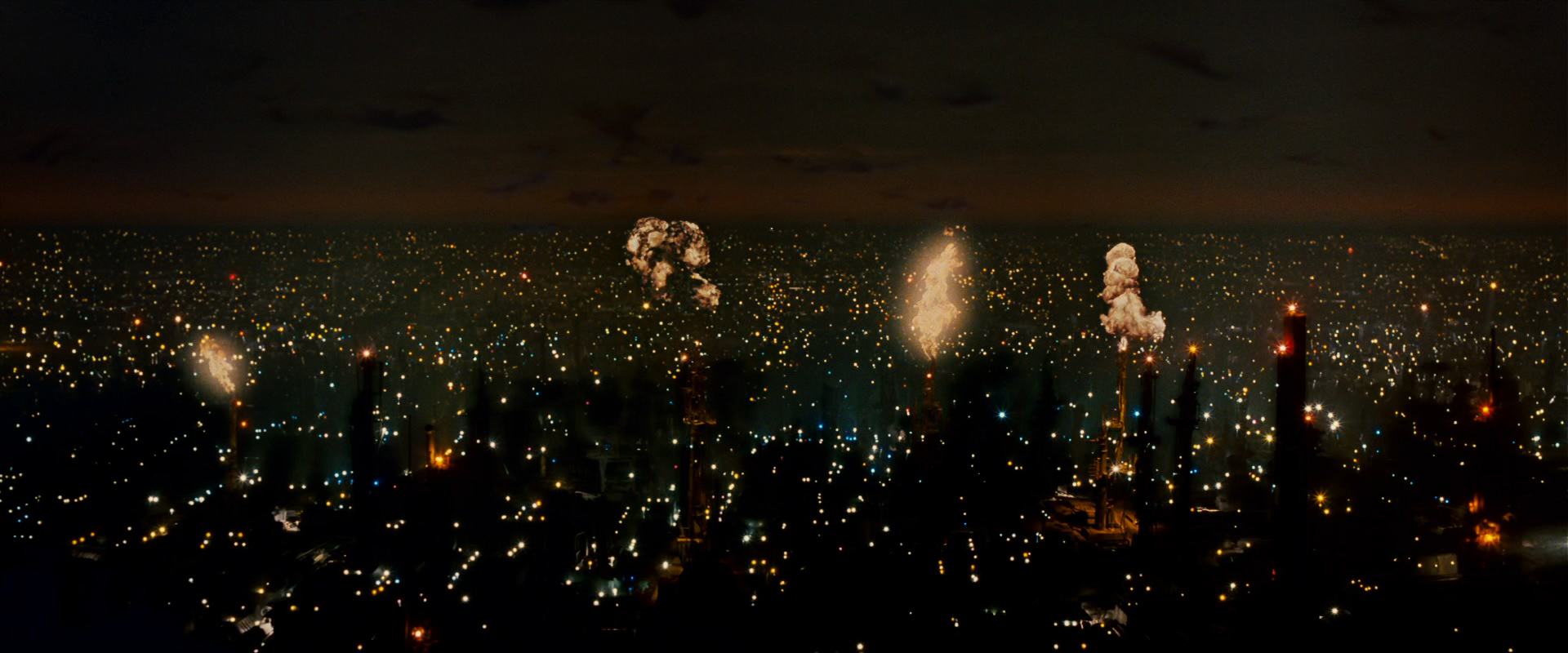
That would depend on your idea of ‘over done.’ While Science Fiction started with the glory days of the space opera, things have changed over the decades. The idea of the world not being a pretty place in the future is something presented in many novels. Is it right? It is wrong? Totally depends on your viewpoint of how the world’s advancing. If you ask me, the dystopian future is more likely then a positive one.

With that said, should Sci Fi writers shy away from it? No. Any idea can be ‘over done’ depending on the person involved. In all honesty, there’s no real original ideas left anyway and we all borrow from other people when we write. However, that’s neither here nor there.

What matters is your viewpoint on things. If you believe in the ‘Blade Runner’ type future then by all means write a book that fits what you see. Don’t worry about what others think! You the writer have to write the story you have in mind and then make it commercially viable-not the critics. Keep that in mind when writing and learn to ignore the artistes.

Happy Writing.

Celebrities and Public Figures in Your Writing

120424075016-stephen-king-2009-story-top


I got to cruising the various forums this morning and run across, once again, another familiar question. “Can I use real people in my writing?” Well, the answer on that depends and here’s why.

If you’re using a public figure and/or celebrity, their rights to privacy are far different than ours legally. That DOES NOT, however, mean you can defame them. One could write Stephen King into your book and provided you didn’t slander him, things would be okay. However, if you added him and then tried to say he slept with a goat..then you can-and will-get sued. See what I mean?

In my third Talia novel I have Bill Clinton, Sandy Berger, Madeline Albright and the WH Chief of Staff in a scene. However, what I do is write them into the roles the played in real life and left and personal feelings out of the writing (which is what a professional does to be honest). So, it has them being who they were in real life, which frees me from litigation issues. See what I mean?

Here is the legal definition of slander and defamation of character:

(not both are from legal-dictionary.thedictionary.com

Slander:

 oral defamation, in which someone tells one or more persons an untruth about another which untruth will harm the reputation of the person defamed. Slander is a civil wrong (tort) and can be the basis for a lawsuit. Damages (payoff for worth) for slander may be limited to actual (special) damages unless there is malicious intent, since such damages are usually difficult to specify and harder to prove. Some statements such as an untrue accusation of having committed a crime, having a loathsome disease, or being unable to perform one’s occupation are treated as slander per se since the harm and malice are obvious, and therefore usually result in general and even punitive damage recovery by the person harmed. Words spoken over the air on television or radio are treated as libel (written defamation) and not slander on the theory that broadcasting reaches a large audience as much if not more than printed publications.

Slander is the spoken word, done with malice (which is the key to prosecuting these cases), that tells lies about another person. So, once again, if I went out and said someone was  a rapist when they weren’t, then that person could sue me.

Defamation of Character:

Any intentional false communication, either written or spoken, that harms a person’s reputation; decreases the respect, regard, or confidence in which a person is held; or induces disparaging, hostile, or disagreeable opinions or feelings against a person.

Defamation may be a criminal or civil charge. It encompasses both written statements, known as libel, and spoken statements, called slander.

The probability that a plaintiff will recover damages in a defamation suit depends largely on whether the plaintiff is a public or private figure in the eyes of the law. The public figure law of defamation was first delineated in new york times v. sullivan, 376 U.S. 254, 84 S. Ct. 710, 11 L. Ed. 2d 686 (1964). In Sullivan, the plaintiff, a police official, claimed that false allegations about him appeared in the New York Times, and sued the newspaper for libel. The Supreme Court balanced the plaintiff’s interest in preserving his reputation against the public’s interest in freedom of expression in the area of political debate. It held that a public official alleging libel must prove actual malice in order to recover damages. The Court declared that the First Amendment protects open and robust debate on public issues even when such debate includes “vehement, caustic, unpleasantly sharp attacks on government and public officials.” A public official or other plaintiff who has voluntarily assumed a position in the public eye must prove that defamatory statements were made with knowledge that they were false or with reckless disregard of whether they were false.

Where the plaintiff in a defamation action is a private citizen who is not in the public eye, the law extends a lesser degree of constitutional protection to defamatory statements. Public figures voluntarily place themselves in a position that invites close scrutiny, whereas private citizens who have not entered public life do not relinquish their interest in protecting their reputation. In addition, public figures have greater access to the means to publicly counteract false statements about them. For these reasons, a private citizen’s reputation and privacy interests tend to outweigh free speech considerations and deserve greater protection from the courts. (See Gertz v. Robert Welch, Inc., 418 U.S. 323, 94 S. Ct. 2997, 41 L. Ed. 2d 789 [1974]).

Distinguishing between public and private figures for the purposes of defamation law is sometimes difficult. For an individual to be considered a public figure in all situations, the person’s name must be so familiar as to be a household word—for example, Michael Jordan. Because most people do not fit into that category of notoriety, the Court recognized the limited-purpose public figure, who is voluntarily injected into a public controversy and becomes a public figure for a limited range of issues. Limited-purpose public figures, like public figures, have at least temporary access to the means to counteract false statements about them. They also voluntarily place themselves in the public eye and consequently relinquish some of their privacy rights. For these reasons, false statements about limited-purpose public figures that relate to the public controversies in which those figures are involved are not considered defamatory unless they meet the actual-malice test set forth inSullivan.

Determining who is a limited-purpose public figure can also be problematic. In Time, Inc. v. Firestone, 424 U.S. 448, 96 S. Ct. 958, 47 L. Ed. 2d 154 (1976), the Court held that the plaintiff, a prominent socialite involved in a scandalous Divorce, was not a public figure because her divorce was not a public controversy and because she had not voluntarily involved herself in a public controversy. The Court recognized that the divorce was newsworthy, but drew a distinction between matters of public interest and matters of public controversy. In Hutchinson v. Proxmire, 443 U.S. 111, 99 S. Ct. 2675, 61 L. Ed. 2d 411 (1979), the Court determined that a scientist whose federally supported research was ridiculed as wasteful by Senator William Proxmire was not a limited-purpose public figure because he had not sought public scrutiny in order to influence others on a matter of public controversy, and was not otherwise well-known.

Further readings

Collins, Matthew. 2001. The Law of Defamation and the Internet. New York: Oxford Univ. Press.

Friedman, Jessica R. 1995. “Defamation.” Fordham Law Review 64 (December).

Jones, William K. 2003. Insult to Injury: Libel, Slander, and Invasions of Privacy. Boulder, Colo.: Univ. Press of Colorado.

Smolla, Rodney A. 1999. Law of Defamation. 2d ed. St. Paul, Minn.: West Group.


While slander and defamation of character are the same (one is spoken and the other is written) the concept remains the same. If the statements are:

1. Untrue

2. Done with Malice

then you don’t have a leg to stand on.

However, with that said, the biggest part of the tort liability suit (which defamation/slander is a civil crime) is proving it was done with malice. If that can’t be proven, then the suit stands a chance of being won by you…but why take the chance?

Best bet? If you’re going to use them, then damn well keep them in the position they were in and don’t deviate from what you’ve seen from them publicly of you’ll end up in deep crap.

My advice for any writer is to read up on tort law anyway. I’m lucky, I took business law, which exposed me to most of the torts out there, and know how they work. However, if you don’t, then don’t risk it.



Novel Openings

writers-block

I cruised the various boards today and another familiar question has come back up. “How do I start my novel?”

There’s two school of thoughts about this and I’ll share them both. The first believes in the ‘wham bam’ type opening. Something BIG happens, either an explosion or car chase or something, right off the bat. This viewpoint says that the reader will instantly be hooked by the rapid-fire action. The second feels that a slower, more cerebral entrance will draw the reader in. While there’s merits in both, whether or or the other is best to use depends on what genre you’re writing.

In novel writing you have two types of openings: 1. Action  2. Active. Let me break them down.

A “action opening” is exactly what it says. Something big is happening, whether it’s a foot chase, a battle, or something that involves some sort of physical action. This, when used correctly, can draw a reader in to the story off the bat. In my opinion it’s a bit of a gimmick, but I’ll explain that later.

An ‘active opening’ is a different type of beast. There’s not overwhelming ‘action’ even happening but it’s more cerebral in how it gets the reader’s attention. A typical opening of this type presents a problem, or a situation, that makes a reader start to wonder what’s happening and will compel them to read on to see the answer.

My personal opinion is that the ‘action’ opening is overused. It’s become a gimmick, similar to those things done in Hollywood, to get the attention of a person. Any person can write a pure action scene, but what happens after that scene’s over?

Active openings take more skill from the writer to pull off but have the higher reward. When done correctly, they completely engross the reader with the world and they keep turning the pages. The trick, though, is how to pull it off. And there’s only one sure fire way to learn this skill, and that is to continually practice on it.

Here’s a blog post on the matter by a literary agent named Kristin on her blog on blogspot about this subject.

http://pubrants.blogspot.com/2012/06/writing-craft-action-vs-active-openings.html

I hope this helps out in understanding the difference.

Description in a Novel

nanowrimo-1


Another post I see a lot when cruising the various boards is “What is too much description?” While description is necessary to a novel, it also slows down you pace. So, when you’re writing your novel and you go ahead and write two pages of description, ask yourself: Is this necessary?

The key is to give them just enough description to be drawn into the story, but not enough to keep them from using their imagination. Now, I can hear what you’re saying. “But..but..what about showing versus telling?” While you want to mix showing AND telling into your novel, there’s no point in taking a page to describe a room. It get’s boring to a reader and also slows your story down to a crawl. There’s a quote, believe it or not given his writing, from King on this:

“In many cases when a reader puts a story aside because it ‘got boring,’ the boredom arose because the writer grew enchanted with his powers of description and lost sight of his priority, which is to keep the ball rolling.”
― Stephen KingOn Writing

A big problem, and one I too had to overcome, is being in love with your own words. Too many writers don’t want to cut down their description “because it won’t show the world to the reader.” If you feel that you need to give them every little tidbit then you’re insulting your reader!!! They aren’t so stupid that they can’t piece together the information you left out! Have a little faith in them. Second, when I hear folks say: “I just finished my first novel and it’s 300k words long,” I know they’re in love with their words. Unless you’re trying to write War and Peace, no novel needs to be that long-especially if you’re a new writer.

Also, and you can’t skip this step, description isn’t something that you just learn how to do. Only by reading great novels, learning from them, and writing your own work will you improve in the situation. I’ll leave you with one last quote from King:

“Good description is a learned skill, one of the prime reasons why you cannot succeed unless you read a lot and write a lot. It’s not just a question of how-to, you see; it’s also a question of how much to. Reading will help you answer how much, and only reams of writing will help you with the how. You can learn only by doing.”
― Stephen KingOn Writing

Happy writing and good luck!

How To Make Your Character More Likable

anime_girl_elf[1]


As I cruised the forums, I found a post that’s ongoing about how to make a character likable. It caused me to shake my head. Characters are people. What makes a person likable? Well here goes:

1. Personality

2. Flaws

3. Mindset

4. Actions

These are the same that allow us to differentiate between people we like and those we don’t like. And, in my opinion, we’re all assholes, it’s just whether we get along with them. There’s a great quote on that subject in Die Hard 2: Die Harder:

John McClane: Guess I was wrong about you. You’re not such an asshole after all.

Grant: Oh, you were right. I’m just your kind of asshole.

That sums us up as people. Each of us are arrogant (some more than others), calculating, self-centered, and insecure. It’s those qualities that not only differentiate each of us from others, but it’s also the thing that makes us human.

How many times have you read a novel and found the character to be flat and wooden or a straight up Mary Sue? It really turns you off to the book doesn’t it? That’s because the writer didn’t take time to develop the character and make them real. Now that doesn’t mean you need to give every ounce of back story either. Stephen King had a good quote on that:

“The most important things to remember about back story are that (a) everyone has a history and (b) most of it isn’t very interesting.”
― Stephen KingOn Writing

The best way to make a likable character is to give them some quality that people can relate to. Even the ‘loner’ character can cause the reader to root for him or her. So, to put things in a nutshell, it’s making real, breathing characters. If you have a hard time doing that, than look at the people around you. What makes them who they are? How do they act? What do they believe in?

A likable character comes from another element writers need to do: be observant.

Happy writing.