Drug overdose deaths spike among middle-aged women

By MIKE STOBBE


(AP) Graphic shows national data on drug overdosing; 2c x 6 inches; 96.3 mm x 152 mm;
Full Image

ATLANTA (AP) – Overdose deaths in the U.S. are rising fastest among middle-aged women, and their drug of choice is usually prescription painkillers, the government reported Tuesday.

“Mothers, wives, sisters and daughters are dying at rates that we have never seen before,” said Dr. Thomas Frieden, director of the Centers for Disease Control and Prevention, which compiled the data.

The problem is one of the few health issues the CDC is working on that are clearly getting worse, he added.

For many decades, the overwhelming majority of U.S. overdose deaths were men killed by heroin or cocaine. But by 2010, 40 percent were women – most of them middle-aged women who took prescription painkillers.

Skyrocketing female overdose death rates are closely tied to a boom in the overall use of prescribed painkillers. The new report is the CDC’s first to spotlight how the death trend has been more dramatic among women.

The CDC found that the number and rate of prescription painkiller overdose deaths among females increased about fivefold 1999 to 2010. Among men, such deaths rose about 3 1/2 times.

Overall, more men still die from overdoses of painkillers and other drugs; there were about 23,000 such deaths in 2010, compared with about 15,300 for women. Men tend to take more risks with drugs than women, and often are more prone to the kind of workplace injuries that lead to their being prescribed painkillers in the first place, experts say.

But the gap has been narrowing dramatically.

Studies suggest that women are more likely to have chronic pain, to be prescribed higher doses, and to use pain drugs longer than men. Some research suggests women may be more likely than men to “doctor shop” and get pain pills from several physicians, CDC officials said.

But many doctors may not recognize these facts about women, said John Eadie, director of a Brandeis University program that tracks prescription-drug monitoring efforts across the United States.

The report highlights the need for “a mindset change” by doctors, who have traditionally thought of drug abuse as a men’s problem, he said. That means doctors should consider the possibility of addiction in female patients, think of alternative treatments for chronic pain, and consult state drug monitoring programs to find out if a patient has a worrisome history with painkillers.

The CDC report focuses on prescription opioids like Vicodin and OxyContin and their generic forms, methadone, and a powerful newer drug called Opana, or oxymorphone.

“These are dangerous medications and they should be reserved for situations like severe cancer pain,” Frieden said. He added that there has not been a comparable increase in documented pain conditions in the U.S. public that would explain the boom in painkiller prescriptions in the last 10 or 15 years.

Some experts said the increase in prescriptions can be traced to pharmaceutical marketing campaigns.

CDC researchers reviewed death certificates, which are sometimes incomplete. Specific drugs were not identified in every death. In others, a combination of drugs was involved, such as painkillers taken with tranquilizers.

CDC officials think more than 70 percent of the overdose deaths were unintentional.

One striking finding: The greatest increases in drug overdose deaths were in women ages 45 through 54, and 55 through 64. The rate for each of those groups more than tripled between 1999 and 2010.

In 2010, overdose deaths in those two groups of middle-aged women added up to about 7,400 – or nearly half the female total, according to CDC statistics.

It’s an age group in which more women are dealing with chronic pain and seeking help for it, some experts suggested.

Many of these women probably were introduced to painkillers through a doctor’s prescriptions for real pain, such as persistent aches in the lower back or other parts of the body. Then some no doubt became addicted, said Dr. Andrew Kolodny, a psychiatrist who specializes in addiction at Maimonides Medical Center in New York City.

There aren’t “two distinct populations of people being helped by opioid painkillers and addicts being harmed. There’s overlap,” said Kolodny, president of a 700-member organization Physicians for Responsible Opioid Prescribing.

Divided We Stand (and will fall)

njjuly4th.

By 

Updated: July 3, 2013 | 6:15 a.m.
July 3, 2013 | 6:00 a.m.


It seems entirely revealing, if dispiriting, that the days before the July Fourth holiday showed Red America and Blue America pulling apart at an accelerating rate.

Of all of our national holidays, Independence Day is the one most intimately rooted in our common history and shared experience. Yet this year it arrives against a background of polarization, separation, and confrontation in the states and Washington alike. With municipal politics as the occasional exception, the pattern of solidifying agreement within the parties—and widening disagreement between them—is dominating our decisions at every level.

On almost all of our major policy choices, the common thread is that the election of 2012 did not “break the fever” of polarization, as President Obama once hoped it might. Last November, Obama became only the third Democrat in the party’s history to win a majority of the popular vote twice. But congressional Republicans, preponderantly representing the minority that voted against Obama, have conceded almost nothing to his majority—leaving the two sides at a stalemate. Meanwhile, beyond the Beltway, states that lean Democratic and those that lean Republican are separating at a frenetic pace.

Consider a few recent headlines. The Supreme Court decision upholding the lower-court invalidation of California’s Proposition 8 restored gay marriage in the nation’s largest state. It also capped a remarkable 2013 march for gay marriage through blue states, including Delaware, Minnesota, and Rhode Island (with Illinois and New Jersey possibly joining before long). The consensus is solidifying fast enough that 2014 could see several blue-state Republican gubernatorial candidates running on accepting gay-marriage statutes as settled law. Former California Lt. Gov Abel Maldonado, a likely 2014 GOP gubernatorial contender who this week reversed his earlier opposition to support gay marriage, may be an early straw in that breeze.

The story in red states, though, remains very different. Almost all of them have banned gay marriage. Some activists believe Justice Anthony Kennedy’s embrace of equal-protection arguments in the decision striking down the federal Defense of Marriage Act might enable litigation challenging those bans; but if not, it may take a very long time for the support for gay marriage among younger voters to dissolve the resistance to the idea in culturally conservative states. Absent further Supreme Court action, the nation could remain a “house divided” on gay marriage for longer than many may expect: The high court’s ruling striking down the remaining 16 state laws banning interracial marriage came in 1967—nearly two centuries after the first state had revoked its ban (Pennsylvania in 1780).

Meanwhile, as gay marriage advances in blue states, red states are competing to impose the tightest restrictions on abortion since the Supreme Court established the national right to it in Roe v. Wade. In Ohio this week, Republican Gov. John Kasich signed legislation requiring ultrasound exams before abortions, effectively cutting off funding for Planned Parenthood and making it more difficult for abortion providers to transfer patients to public hospitals. In Texas, after the dramatic filibuster by Democratic state Sen. Wendy Davis temporarily disrupted his plans, Republican Gov. Rick Perry this week opened another legislative special session that is likely to ban abortion at 20 weeks and impose stringent new safety requirements that would shutter most of the state’s abortion providers. All of this follows a cascade of legislation restricting abortion in Republican-run states from Arkansas and Louisiana to Kansas and North Dakota—most of which are already facing legal challenges.

In Washington, there’s little sign of convergence. Hopes for a budget “grand bargain” are flickering. In the Senate, the two parties have worked together to pass a farm bill, and more dramatically a sweeping immigration overhaul that won support from all 54 Democrats and 14 Republicans. But House Republicans, who recently collapsed into chaos when they couldn’t pass a farm bill, are pledging to block any reform that includes a path to citizenship for illegal immigrants—an indispensable component of legislation as far as Democrats are concerned. On big issues, the Supreme Court looks just as chronically divided, and the split often comes down to Republican- and Democratic-appointed justices.

All of this reveals a political system losing its capacity to create common ground between party coalitions divided along economic, racial, generational, and even religious lines. Some variation in state policy is healthy, but states are now diverging to an extent that threatens to undermine equal protection under the law. The stalemate in Congress reflects genuine differences, but the reluctance to compromise—most intractable among House Republicans—prevents us from confronting common challenges.

In all these ways, our contemporary politics is ignoring the simple truth that none of us are going away—not the cosmopolitan coasts, nor the evangelical South. Our choices ultimately come down to bridging our differences or surrendering to endemic separation in the states and stalemate in Washington. This week we celebrate the moment when the authors of the Declaration of Independence concluded they had no choice but “to dissolve the political bands which have connected them with another.” It’s an excellent opportunity to consider how ominously our own “political bands” are fraying.

Defining Moment in Writing

writers-block


That was asked on the writing forums and I think it’s different for each of us. Sometimes it can be an internal force that pushes you to do it or an external one. In my case it was external.

There’s a very wise woman on writingforums.org named Maiamamma. I won’t go into her background other than to say that she’s been in the business of books and scriptwriting for decades now. One day, I’d been posting away on the forums while piddling with a novel. She asked me a serious question:

“Do you want to be know as a person who posts on a forum or as a person who’s a serious writer?”

It was then that I realized you can’t do both. If you posting like made, then when do you have time to write? And conversely, when you’re writing (and editing) when do you have time to post? While I might cruise the forums before I start editing, or when I get off work, I don’t spend hours posting. I might leave the page open while I figure out what items on this blog I wish to mention on the one I have there.

What was the thing that made you choose to be a serious writer?

RIP Ken Custalow

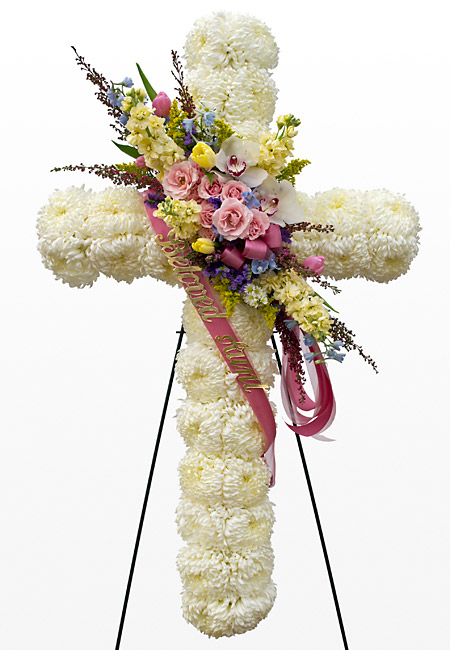
funeral-flowers-cross-6LG


May you rest in the arms of the Lord, Ken. I know he called you home this morning and you are walking the streets of gold, free from the pain our earthly bodies give us. A true and faithful servant to the Mattaponi tribe.

I will remember you and your deep voice and big laugh for the rest of my life. Enjoy the streets of gold, my friend.

Depression and BiPolar

bipolar22


I read a post on the forums today, and I have complete compassion for the poster. The question was how to write when depressed?

As someone who suffers from Bipolar, I’m not sure it’s possible to be able to effectively write when suffering from clinical depression. When I’m hypomanic, I might get more ‘work’ done but it’s sloppy and needs complete rewrites to get it to make sense. On the other hand, when depressed, I don’t get much work done and what does get accomplished is wordy, slow and twinged in sadness. It also ends up being a miserable time to work.

Nothing, and I mean nothing, is worse then having Bipolar or Schizophrenia. For me my mood swings can sometimes be minute to minute but mainly day by day and it’s miserable to go through. When younger I used to a complete cycle in a matter of minutes. Someone or something would bother me, it would build then I’d rapidly shoot up into an explosion and then suddenly drop into a hole and feel like crying. It was miserable.

I’m not trying to help Big Drug with my next comments but I need to tell the truth. Nothing I’ve done in the past has ever helped until my Doctor found the right medicine combo. There’s no real way to self treat Bi-polar. It just doesn’t work…and the damndest thing is: it’s fairly common for Bipolar people to be great artists (and writers). However, if we don’t treat ourselves, the odds of killing ourselves and depriving the world of what we can do go up drastically.

I don’t have the stats at my fingertips but the rate of untreated Bipolar patients who commit suicide is higher than those who are. And that’s no guarantee that it won’t happen either…but it helps out a lot.

If anyone reading this blog feels like they might have Bipolar, than I suggest seeing a physician and let them check you. While it might cost a lot of money sometimes to get treated, you’ll feel so much better and happier that it’ll be worth it.

I hope everyone has a good day.

Does Your Blog Have Personality? From Nelson Literary Agency Email Letter for July

ipad_22728_anime_girls_anime_girls_with_guns


A Message from Kristin Nelson

Does Your Blog Have Personality?

Kristin NelsonJust this past week, I attended LitFest, an annual event hosted by Lighthouse Writers Workshop right here in Denver. During a one-on-one conference, a writer asked me a question about her blog. She mentioned that in order to ease the social-media burden, she was blog sharing with several other writers; each curated the blog a month at a time. She noticed the blog wasn’t getting much traffic and asked me why.

To answer her question, I first had to ask a few of my own.

I asked if she herself follows any blogs. She said yes. Then I asked why. Her answer? Because she likes the content or finds the information useful.

But is that all?

I’m nothing if not persistent. When she looked at me blankly, I said there are dozens of blogs about agents and publishing. Why did she prefer some blogs over others?

It’s not just about content. It’s also about personality.

Blogs have personalities, and readers like to follow bloggers who have a unique style or an appealing voice. A shared blog maintained by multiple writers might lack a distinguishing personality, style, or voice. If that’s the case, chances are good the blog won’t gain much traction.

Watching her “Eureka!” moment made me think that you might find this information helpful, too. So ask yourself: Does my blog have a distinct personality? If the answer is no, then maybe blogging isn’t the right social-media platform for you.

And that’s my agent public service moment for July.